
How to talk about your weekend in Spanish: the past tense

Every Monday, in offices all over Barcelona, someone asks ¿Qué tal el fin de semana? (How was your weekend?). Answering means talking about the past, and for many learners that's where the conversation stops.
After a level test, the comment our teachers write most often is that the student speaks well in the present tense but finds the past tense difficult. This lesson covers the tense you need for finished events: the regular endings, five irregular verbs that come up all the time, and the mistakes we hear most.
Which past tense?
Spanish has several past tenses. For things that happened at a specific, finished time (yesterday, last Saturday, in 2019), you use the pretérito indefinido, also called the pretérito perfecto simple.
El sábado fui a la playa. (On Saturday I went to the beach.)
In Spain you'll also hear a second past tense, he ido or he comido, for things that happened today or this week: Hoy he comido con mis compañeros (Today I had lunch with my colleagues). On a Monday someone may ask ¿Qué has hecho este fin de semana? using that tense. Answering with El sábado fui… is still correct, because you're talking about a specific day. We'll cover the second tense in another lesson.
Regular verbs
Regular verbs follow one of two patterns. Verbs ending in -er and -ir share the same endings.
hablar (to speak) | comer (to eat) | vivir (to live) | |
|---|---|---|---|
yo | hablé | comí | viví |
tú | hablaste | comiste | viviste |
él, ella, usted | habló | comió | vivió |
nosotros | hablamos | comimos | vivimos |
vosotros | hablasteis | comisteis | vivisteis |
ellos, ellas, ustedes | hablaron | comieron | vivieron |
Two things to notice:
The accent matters. Hablo means "I speak", but habló means "he or she spoke". The stress moves to the last syllable.
The nosotros form of -ar and -ir verbs is the same as in the present: hablamos can mean "we speak" or "we spoke". Words like ayer (yesterday) or el sábado (on Saturday) make the meaning clear.
Five irregular verbs you'll use every Monday
These verbs don't follow the pattern, and they are the ones you need most when you talk about your weekend.
Verb | I… | He or she… | Example |
|---|---|---|---|
ir (to go) | fui | fue | Fui a la playa. (I went to the beach.) |
hacer (to do, to make) | hice | hizo | No hice nada especial. (I didn't do anything special.) |
ver (to see, to watch) | vi | vio | Vi una película. (I watched a film.) |
estar (to be) | estuve | estuvo | Estuve en casa todo el domingo. (I was at home all Sunday.) |
tener (to have) | tuve | tuvo | Tuve mucho trabajo. (I had a lot of work.) |
Ir and ser (to be) share the same forms in this tense, so fui can mean "I went" or "I was". The rest of the sentence tells you which.
A Monday conversation
Laura: ¿Qué tal el fin de semana? (How was your weekend?)
You: Muy bien. El sábado fui a la playa con unos amigos y comimos paella. ¿Y tú? (Very good. On Saturday I went to the beach with some friends and we had paella. And you?)
Laura: Yo estuve en casa. Vi una película y no hice nada especial. (I was at home. I watched a film and didn't do anything special.)
The mistakes we hear most
Yo fue instead of yo fui. Fue is "he or she went".
Yo hizo instead of yo hice. Hizo is "he or she did".
Using the present for the past. El sábado voy a la playa means "On Saturday I'm going to the beach", a plan, not something that happened.
Fuistes, hicistes. You'll hear these in the street, even from Spanish speakers, but the standard forms are fuiste and hiciste, with no final -s.
Dropping the accent when you speak. Hablo and habló sound different. Stress the last syllable when you mean the past.
Try it
Write three sentences about last weekend using fui, hice, vi, estuve or tuve, and say them out loud a few times before Monday. For example: El sábado fui al mercado y el domingo estuve en casa.
Learning the past tense in class
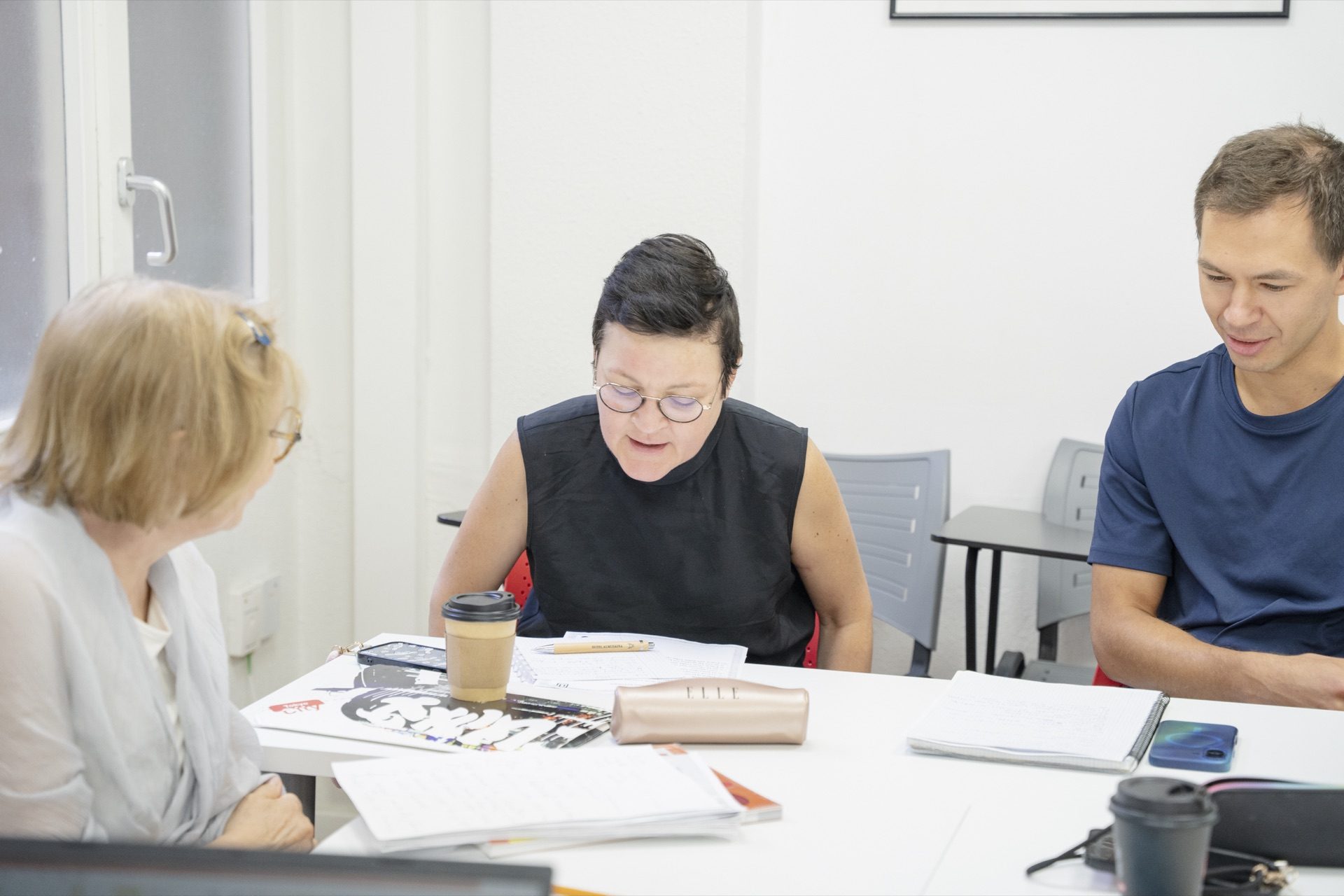
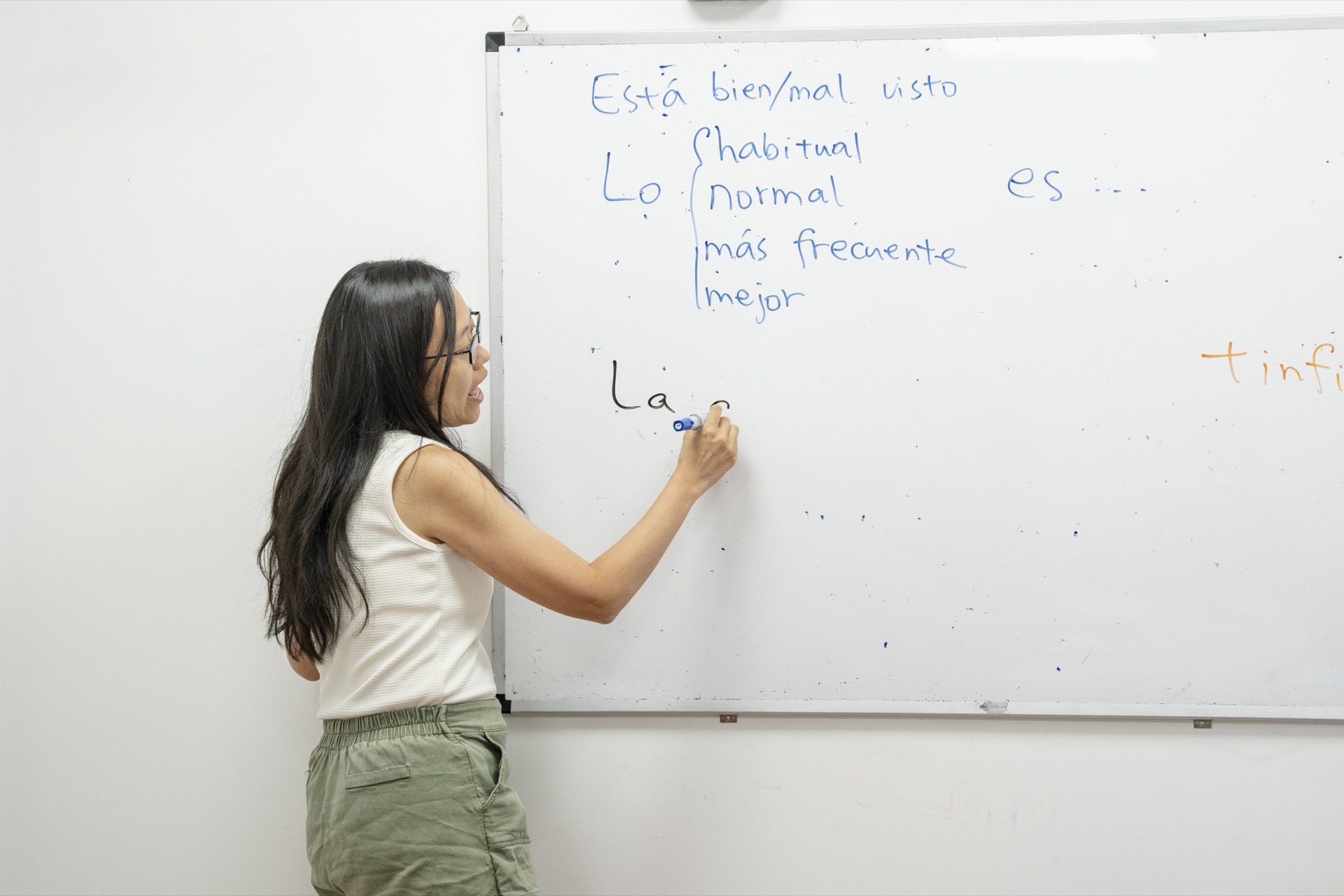
In our courses, the past tenses are the main topic of A2.1, the first part of the A2 level. In class you practise them in conversation, which is the part that's hard to do alone: telling a story, answering a question you weren't expecting, and being corrected while you speak. If you work during the day, see our evening and part-time classes.
If you'd like to know which level you're at, book a free level test. It takes 15 minutes by phone or video call, or 20 minutes in person at our school at Carrer d'Aragó 405.
Articles populaires
Cours d'espagnol d'été à Barcelona – pourquoi c'est une bonne idée

Les meilleurs quartiers de Barcelone pour les étudiants en langues

Les meilleures villes pour apprendre l'espagnol en Espagne - en 2026

Les avantages de l'immersion culturelle quand tu apprends l'espagnol à Barcelona


Abonne-toi à notre liste de diffusion !
Recevez les actualités des cours, les avis des diplômés, des réductions exclusives et bien plus encore